
Athena
Team knowledge, with the source attached
Branding and implementation for a team knowledge assistant. Athena turns an organisation’s documents and forms into answers people can trace back to a source, with one identity across the marketing site and product.
Visit Athena ↗Read the full story
The problem
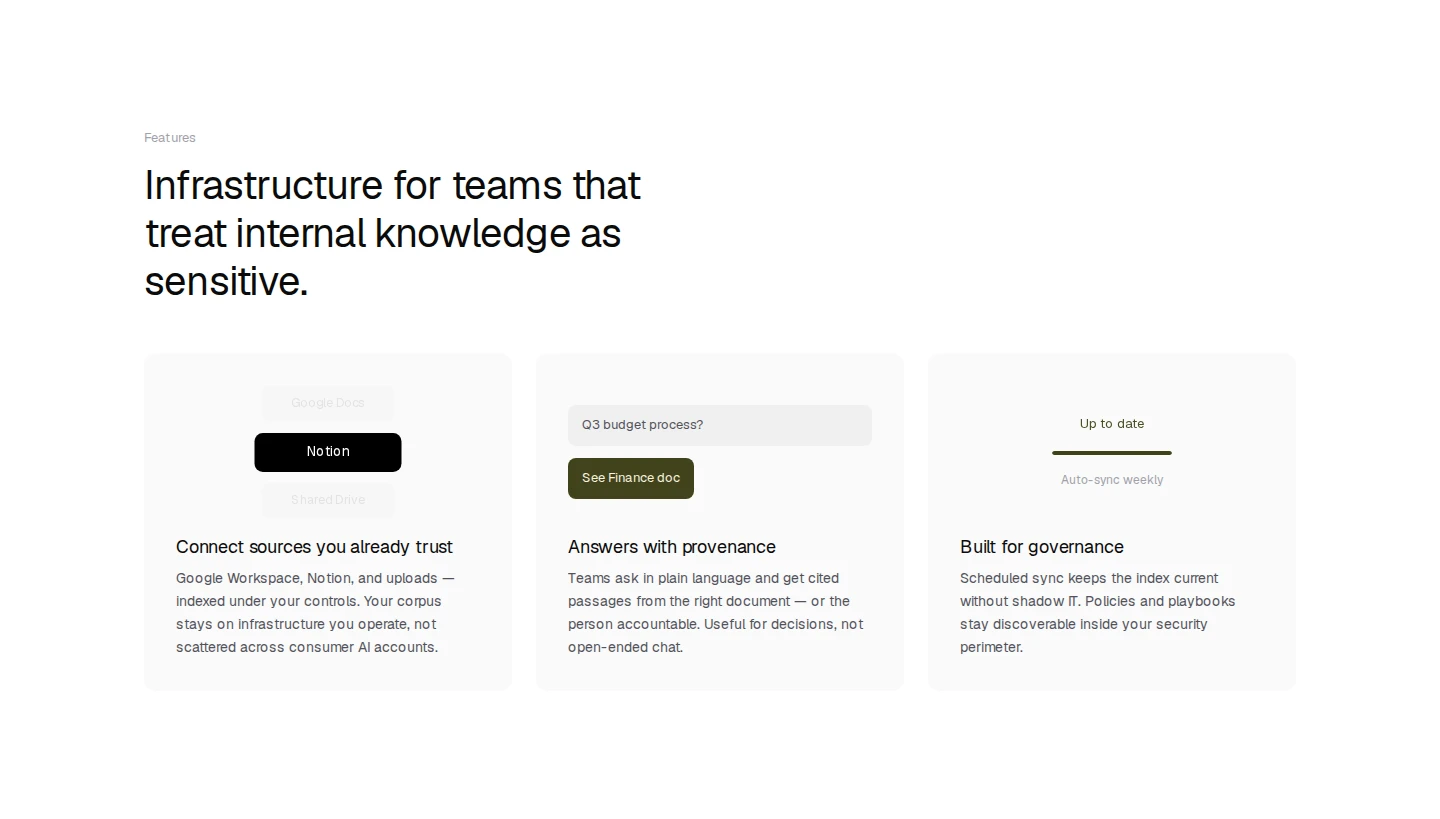
Policies, playbooks and feedback live across documents, wikis and forms. Finding the right answer often means finding the right person first. Athena lets teammates ask in plain language, then returns an answer from their organisation’s material with the source cited. When the material does not cover the question, it says so.
The brand
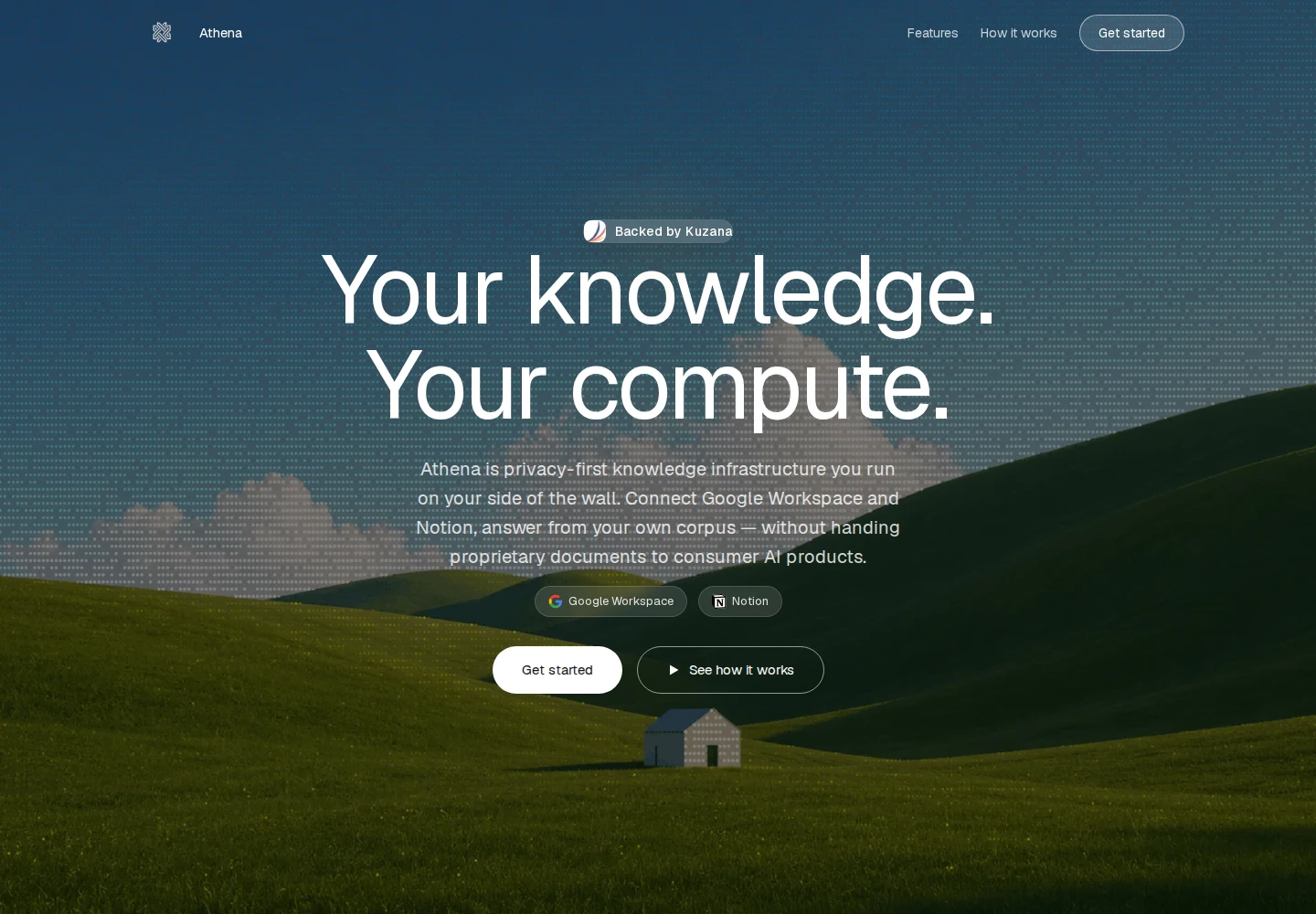
The interwoven geometric mark gives Athena a distinct signature. The landing page pairs a landscape with a field of dots, connecting the idea of a place you control to a searchable body of knowledge. Regular-weight type and a restrained neutral palette keep the message clear. Inside the product, the same restraint makes room for questions, answers and their sources.
The implementation
Separate Next.js marketing and product apps connect to a Python API. Admins create a workspace and add Notion pages, Tally forms, public Google Docs or uploaded files. The ingestion pipeline splits and indexes that material in Postgres with pgvector, scoped to the organisation. Chat retrieves relevant passages and cites their sources; a similarity cutoff returns a no-match when the retrieved material is too weak. Sign-in, organisation setup and per-seat billing complete the product flow. Private Drive sync and asking from Slack remain planned extensions.

Have something like this in mind?
Booking for November